
Event-Driven Architecture: A Technical Guide with Node and RabbitMQ
Master event-driven microservices. A technical deep dive into decoupling services using Node.js, RabbitMQ, and eventual consistency patterns.
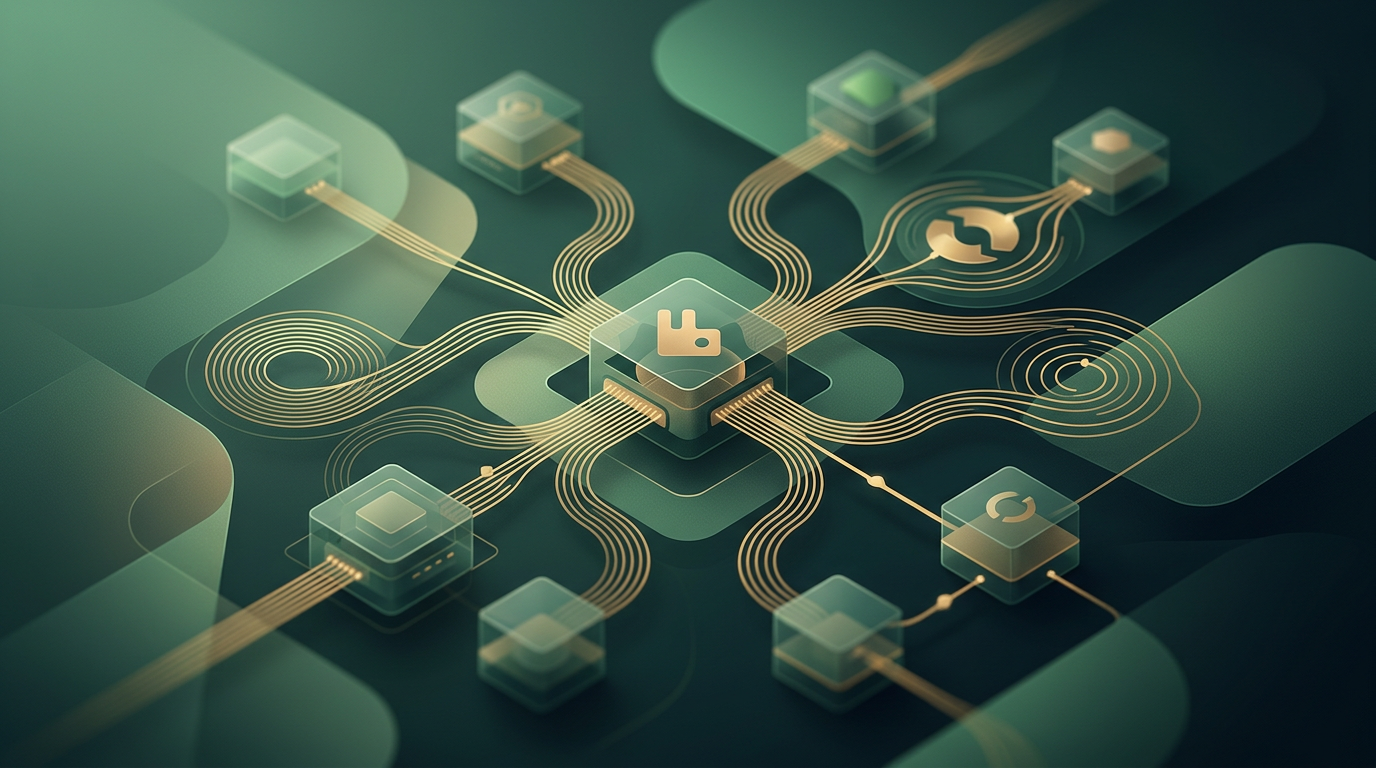
Most distributed systems fail not due to a lack of resources, but because of excessive coupling that turns a microservices setup into an unmanageable 'distributed monolith.' If a failure in your inventory service immediately halts your checkout process, you don't have microservices; you have a time bomb chained by synchronous HTTP calls. Event-Driven Architecture (EDA) isn't a trend; it's the answer to the need for true resilience and horizontal scalability.
The Problem with Synchronous Coupling
When Service A calls Service B via REST, A must wait for B to respond. If B is slow, A hangs. If B crashes, A fails. Multiply this by 50 microservices and you have a guaranteed cascade of errors. In an Event-Driven architecture, Service A simply emits an event: "OrderCreated". It doesn't care who is listening or what they do with that information. It simply deposits it into a message bus and moves on.
Why Choose RabbitMQ in 2024?
While tools like Kafka are powerful for massive data streaming, RabbitMQ remains the king of flexibility for inter-service communication thanks to its native AMQP support and intelligent queue management. It allows for complex routing (Direct, Fanout, Topic) that facilitates patterns like Retry Logic and Dead Letter Exchanges without extreme configuration overhead.
Technical Implementation: Producer and Consumer in Node.js
For this example, we'll use the amqplib library. Let's imagine a flow where an Orders service notifies an Email service.
// Producer: Orders Service
const amqp = require('amqplib');

async function publishOrder(orderData) {
  const connection = await amqp.connect('amqp://localhost');
  const channel = await connection.createChannel();
  const exchange = 'order_events';

  await channel.assertExchange(exchange, 'topic', { durable: true });
  channel.publish(exchange, 'order.created', Buffer.from(JSON.stringify(orderData)));

  console.log(" [x] Sent 'order.created'");
  setTimeout(() => connection.close(), 500);
}
The consumer, on the other hand, must be idempotent. This means if it receives the same message twice (due to a network retry), the end result must not corrupt the data.
// Consumer: Email Service
const amqp = require('amqplib');

async function consumeEvents() {
  const connection = await amqp.connect('amqp://localhost');
  const channel = await connection.createChannel();
  const queue = 'email_queue';

  await channel.assertQueue(queue, { durable: true });
  await channel.bindQueue(queue, 'order_events', 'order.created');

  channel.consume(queue, (msg) => {
    const content = JSON.parse(msg.content.toString());
    console.log(" [v] Processing email delivery for order:", content.id);
    // Delivery logic here
    channel.ack(msg);
  });
}
Critical Patterns for Stability
Implementing a message broker isn't just about throwing JSONs into the void. To make the system robust, you must consider:
- Outbox Pattern: Prevents the inconsistency of saving to the DB but failing to send the message. First, save the event in a table within the same DB, then an independent process publishes it.
- Dead Letter Exchanges (DLX): If a message fails after 3 retries, move it to an error queue for manual inspection. Don't block the main pipe.
- Idempotency: Use a unique
order_idto check if the action has already been processed before executing business logic.
"In distributed systems, don't ask if something will fail, ask how fast you will recover when it does. Events are your life insurance."
Comparison: RabbitMQ vs Redis Pub/Sub vs Apache Kafka
| Feature | RabbitMQ | Redis Pub/Sub | Apache Kafka |
|---|---|---|---|
| Persistence | High (Disk queues) | Ephemeral (In-memory) | Very High (Segmented Log) |
| Use Cases | Complex Routing, Tasks | Real-time notifications | Big Data, Event Sourcing |
| Complexity | Medium | Low | High |
Handling Eventual Consistency
By moving from synchronous to asynchronous, we abandon immediate consistency. If the user refreshes the page milliseconds after creating an order, the inventory might not have updated in their view yet. This is solved with Optimistic UI on the frontend or websockets that notify the client when the event cycle is complete. It's a mental paradigm shift for the product team, not just the engineers.
How we approach it at Julsmind SAS
At Julsmind SAS, we help scale-ups in Medellín and the US migrate from legacy architectures to event-driven ecosystems. We don't implement technology for the sake of trends; we analyze transactional load and critical failure points to decide whether you need RabbitMQ's fine-grained orchestration or Kafka's raw throughput. Our focus centers on observability: if a message gets lost in the bus, our implementations ensure it is traceable, recoverable, and auditable, protecting our clients' business integrity.
Are you struggling with unexplained latency or cascading failures in your current architecture? Let's talk about how a strategic transition to events can unlock your product's scaling potential. Schedule a technical session with our team here.