
Smart Logistics in LATAM: AI Use Cases for Last Mile Optimization
Discover how logistics companies in LATAM are optimizing routes and costs with AI. Real cases from Medellín to São Paulo. Tech stack and ROI insights.
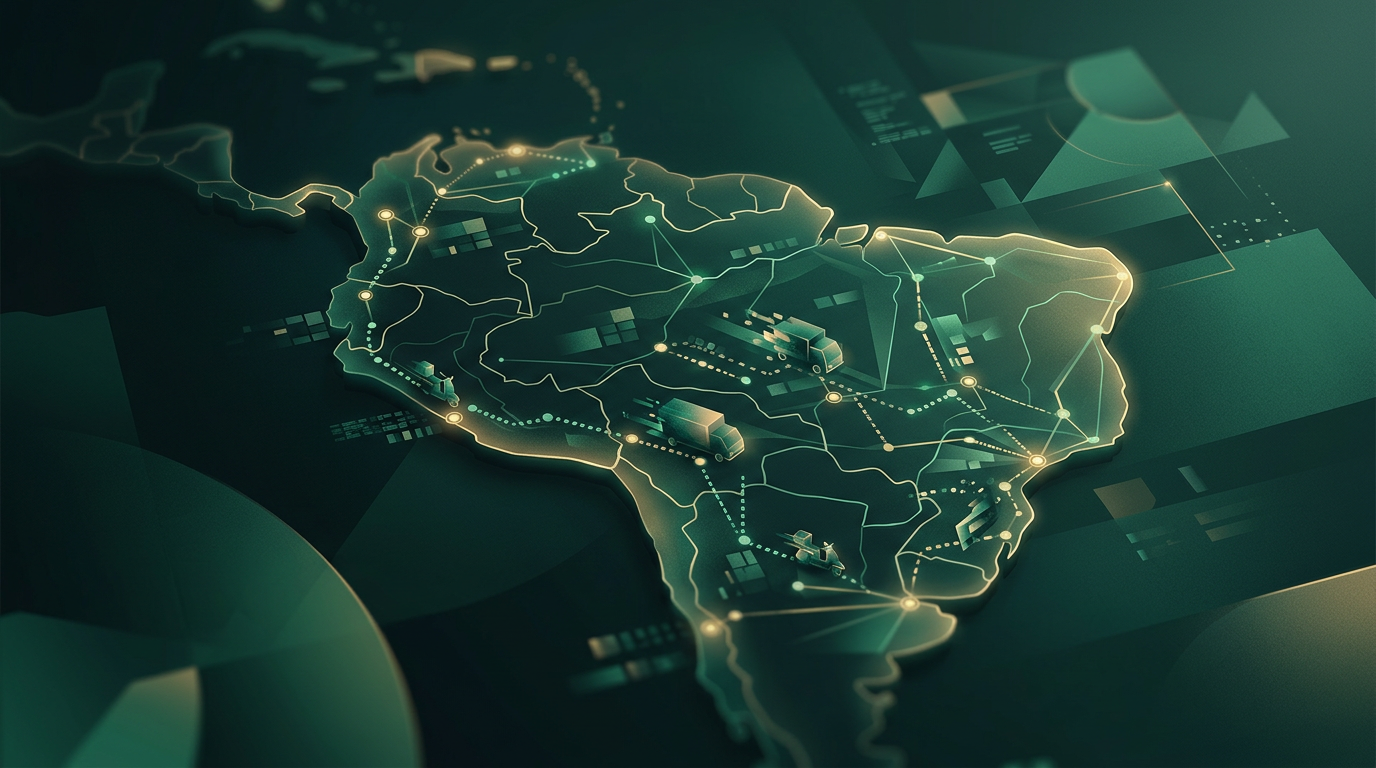
Shipping a package in Bogotá is not the same as shipping it in Berlin; while the latter depends on efficiency, the former is a battle against urban chaos, unpredictable infrastructure, and sudden weather changes. In Latin America, logistics costs can represent up to 15% of a product's value, compared to 8% in developed markets. The good news is that software is not just closing that gap—it's turning uncertainty into a competitive advantage through Artificial Intelligence.
The Last Mile Labyrinth in Latin America
The "last mile" is the most expensive and complex stretch of the supply chain. In cities like Medellín, São Paulo, or Mexico City, the challenges go beyond simple distance. We are talking about hard-to-reach areas, traffic restrictions like "pico y placa," and a geography that defies standard Google Maps algorithms. The companies winning today aren't those with the most trucks, but those with the best data.
Why do traditional methods fail?
- Static vs. Dynamic: Traditional route plans are made at the start of the day. In LATAM, a road blockade at 10:00 AM can invalidate the entire plan.
- Underestimating Service Time: Unloading time at a building in El Poblado is radically different from an industrial zone. AI learns these zone-specific variables.
- Lack of Visibility: The absence of integration between the warehouse and the carrier creates information silos.
"Logistics in Latin America is not an exact science; it is a discipline of constant adaptation. AI is the only engine capable of processing that entropy in real time."
Success Cases: When Algorithms Find the Way
Several startups and retail giants in the region are already proving that optimization is not just theory. Let's look at three concrete implementation examples.
1. Retailers in Colombia: From Intuition to Machine Learning
Major retailers in Colombia have implemented Vehicle Routing Problem (VRP) models that integrate historical and real-time traffic data. By using genetic algorithms and tabu search, they have achieved an 18% reduction in total mileage. This not only lowers fuel costs but also increases delivery density (delivering more packages with fewer vehicles).
2. Fintech and Logistics: The Necessary Convergence
In Brazil, logistics companies are using AI to predict the success probability of Cash on Delivery (CoD), a method still prevalent in the region. If the algorithm detects a low probability of the customer being home based on previous deliveries, it reschedules the route before the truck even leaves, saving the cost of a failed attempt.
3. 3PL Logistics Operators in Mexico
Through the use of computer vision in distribution centers, package weighing and dimensioning are being automated. This data instantly feeds the routing engine to ensure that vehicle cubic capacity is utilized at 95%, avoiding the shipment of "air" in trucks.
Tools and Stacks for Optimization
To build a solution of this type, you don't start from scratch. The modern stack combines robust cloud services with specialized libraries:
- Google OR-Tools: A software suite for combinatorial optimization that is the gold standard for routing problems.
- Python & Pandas: For cleaning and analyzing massive geospatial data.
- PostGIS: The PostgreSQL extension that allows for efficient complex spatial queries.
- Kafka / RabbitMQ: For real-time event processing (order status changes, traffic alerts).
# Simplified example of how to structure a time window constraint
routing.add_dimension(
    capacity_callback,
    0,  # maximum slack
    3000,  # maximum vehicle capacity
    True,  # start cumul at zero
    'Capacity'
)
The Silent ROI: Beyond Fuel
When we talk about AI in logistics, fuel savings are just the tip of the iceberg. The true return on investment comes from customer retention. In an ecosystem where the Amazon standard has spoiled users with immediacy, a missed 4-hour delivery window is a lost sale forever. AI allows for 30-minute delivery windows with 98% accuracy.
Environmental and Social Impact
Route optimization has a direct impact on the carbon footprint. Fewer kilometers traveled mean fewer CO2 emissions. Additionally, in dense cities, reducing the number of trucks circulating unnecessarily alleviates urban congestion, a critical point in corporate sustainability agendas.
How we approach it at Julsmind SAS
At Julsmind SAS, we understand that logistics in markets like Colombia or Mexico requires custom solutions that cannot be found in out-of-the-box software. We help logistics and retail companies integrate AI models and real-time data architectures that speak the language of their local operations. From Medellín, we develop systems that connect fleets with intelligent command centers, allowing for scalability that manual processes simply cannot support. We transform your shipping data into a real competitive advantage.
Is your logistics operation ready to stop reacting to chaos and start predicting it? If you want to explore how to implement route optimization models or geospatial data processing in your company, let's talk today about your next technological leap.